Bulgarian Split Squat: Form, Benefits & Workouts
Bulgarian split squat guide: proper form, muscles worked, research-backed benefits, and complete workout programs from beginner to advanced.
Medical Disclaimer: This content is for informational purposes only and is not a substitute for professional medical advice. Consult a qualified healthcare provider before starting any new fitness or supplement program.
In this article
The Bulgarian split squat usually gets treated as an accessory exercise, mostly used as something you do after heavy squats to hit the quads and glutes a bit more, but that underestimates its potential. Research on unilateral training shows Bulgarian split squats can match bilateral squats for strength development, produce higher peak force per leg, and add sprint and agility benefits that bilateral squats don’t.
This guide covers everything that matters: proper form, the muscles it trains, the research case for using it as a primary lift, how to load it appropriately, programming variables most guides ignore, four complete workout templates for different experience levels, variations and common mistakes.
What Is the Bulgarian Split Squat?
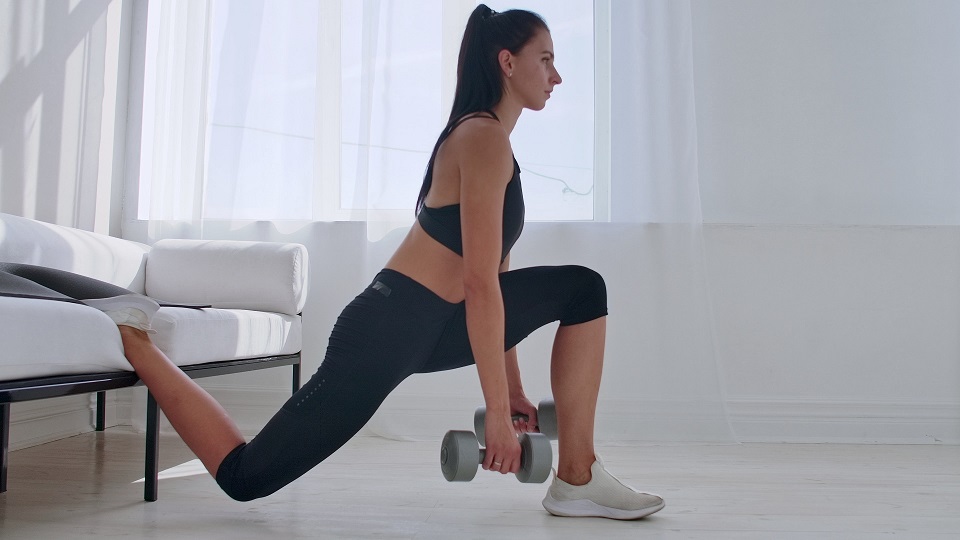
The Bulgarian split squat is a unilateral squat variation performed with your rear foot elevated on a bench or box behind you, while you squat down on your front leg. Your rear leg provides minimal support, just enough to balance, and the front leg does almost all the work.
The name is a bit of a historical footnote. The movement was popularized by Bulgarian Olympic weightlifting coaches in the 1980s, hence the name. Its other name, rear-foot-elevated split squat (RESS), is more descriptive of what you’re actually doing. Both names refer to the same exercise.
Compared to a bilateral back squat, the unilateral setup addresses side-to-side strength asymmetries that bilateral lifts can mask, and compared to pistol squats or single-leg squats, the rear foot support makes the movement more accessible without big mobility and balance requirements.
Muscles Worked by the Bulgarian Split Squat
The Bulgarian split squat is a compound movement. It crosses the hip, knee, and ankle simultaneously, recruiting most of the muscles in the lower body plus the core for stabilization.
Primary Movers
The quadriceps are the main movers throughout the lift. They control the descent on the way down and extend the knee on the way up. The vastus medialis and rectus femoris particularly light up, which is one reason the Bulgarian split squat is useful for athletes who need knee extension strength at the bottom of single-leg stance (sprinters, jumpers, team sport athletes).
The gluteus maximus does significant work at the bottom of the squat and during hip extension on the way up. Depth and stance length both affect how much glute is recruited. Deeper and longer stances hit the glutes harder.
The hamstrings contribute to hip extension and knee stabilization, especially in longer stances where the hip is more flexed at the bottom.
The adductors (inner thigh, particularly adductor magnus) function as hip extensors in deep single-leg positions.
The gluteus medius is heavily involved in stabilizing the pelvis throughout the movement. On a bilateral squat, both hips work together to keep the pelvis level. On a unilateral lift, one gluteus medius has to do that job alone, which is why Bulgarian split squats expose hip stability weaknesses that back squats hide.
Supporting Muscles
The core (rectus abdominis, obliques, erector spinae) works isometrically throughout the lift. Single-leg stance under load demands constant anti-rotation and anti-lateral-flexion from the core. Every Bulgarian split squat rep is also a core exercise.
The calves (gastrocnemius and soleus) stabilize the ankle. Limited ankle dorsiflexion on the front leg is one of the most common reasons lifters struggle with Bulgarian split squats, and it’s often the first mobility restriction they discover.
The hip flexors of the rear leg (particularly the rectus femoris and iliopsoas) get stretched at the bottom position, which has a useful secondary benefit. Over time, Bulgarian split squats can help address tight hip flexors that many desk-bound lifters have.
How to Perform the Bulgarian Split Squat
Bulgarian split squats may look complicated the first time you try them, but they aren’t. The setup takes a few reps to dial in, but once you find the right stance and foot position, they’re pretty straightforward.
Setup
Stand a few feet in front of a bench, box, or sturdy surface that’s roughly knee height. Place the top of your rear foot on the bench behind you, either with the top of the foot flat on the surface or with the toes curled under (personal preference, both work).
Step your front foot forward until you find the right stance length. A good starting point: when you lower into the bottom position, your front shin should be roughly vertical or slightly past vertical, and your rear knee should hover just above the floor. If your front knee shoots way past your toes or you feel unstable, your stance is too short. If your front hip feels like it can’t get under you, your stance is too long.
Stand tall with the front foot planted flat, core braced, chest up. If you’re using dumbbells, hold them at your sides. If using a kettlebell, hold it in the goblet position at your chest. If using a barbell, either back rack or front rack the bar, same as a regular squat.
Going Down
Lower yourself by bending the front knee and letting the rear knee travel toward the floor. Keep your front foot planted flat throughout. Most of your weight should stay on the front leg, roughly 80 to 90 percent. The rear leg is for balance only.
Descend with control, don’t rush it, the eccentric phase is where most of the muscle-building stimulus happens. A 2 to 3 second lowering phase is a good default for hypertrophy work.
Go as deep as your mobility and stability allow. For most lifters this means the rear knee lightly touching or hovering just above the floor. If your front heel lifts at the bottom, either your stance is wrong, your ankle mobility is limiting depth, or your weight is shifting backward onto the rear leg. Adjust before adding more load.
Coming Up
Drive through the front foot, pushing the floor away. Keep pressure on the whole front foot, heel and toes both. Your hip and knee extend together. At the top, stand tall through the front leg without locking out aggressively or shifting weight back to the rear leg.
Reset your brace and stance before the next rep. Finish all reps on one side before switching to the other side. Don’t alternate legs unless you’re doing a specific alternating variation.
Why Bulgarian Split Squats Can Be a Primary Lift
A 2016 study by Speirs et al. tested this directly. Academy rugby players were split into two groups. One group trained exclusively with Bulgarian split squats (the study calls them rear-foot-elevated split squats, RESS) for 5 weeks. The other group trained with back squats only. Both groups followed matched progression and volume.
The results: the unilateral training group matched the back squat group in strength gains. They also produced similar improvements in 40-meter sprint time and change-of-direction performance. One group never touched a bilateral barbell squat for 5 weeks and came out just as strong, with equivalent athletic improvements.
That doesn’t mean Bulgarian split squats are objectively better than back squats. It does mean they can carry the primary lift role in a program, which unlocks possibilities most lifters never explore:
- Lifters with lower back issues can train lower-body strength without much spinal loading
- Home gym setups without a squat rack can still develop meaningful leg strength
- Training blocks emphasizing asymmetry correction can run longer without sacrificing strength
- Lifters in rehab from bilateral injuries can keep training one side hard
For a deeper look at how compound exercises fit into complete muscle-building programs, our guide to compound exercises for building muscle covers how movements like the Bulgarian split squat can fit into weekly splits.
Finding Your Starting Load
Bodyweight Assessment
If you’ve never trained Bulgarian split squats, start with bodyweight only. Do 2 to 3 sets of 8 to 10 reps per leg. If you can hit full depth (rear knee near the floor) with controlled descents and no wobbling, you have the balance and mobility base to start loading.
If you can’t hit depth with bodyweight, work on that first. Stretch your hip flexors, improve your ankle mobility, practice rear-foot-elevated setup without load. Two or three weeks of bodyweight practice usually resolves the limitations.
Load Conversion from Back Squat
If you already train the back squat, your back squat numbers can give you a starting load for Bulgarian split squats. A practical guideline based on coaching convention and biomechanical reality: start with dumbbells totaling 25 to 45 percent of your back squat 1RM, split evenly between both hands.
Examples:
- A lifter who back squats 100 kg (220 lb) starts with 12 to 22 kg total (so two 6 to 11 kg dumbbells, roughly 14 to 25 lb per hand)
- A lifter who back squats 140 kg (310 lb) starts with 18 to 35 kg total (two 9 to 17 kg dumbbells per hand)
- A lifter who back squats 180 kg (400 lb) starts with 25 to 45 kg total (two 12 to 22 kg dumbbells per hand)
These ranges are starting points for 8 to 12 rep working sets. Adjust based on how the first few sets feel. If 10 reps with perfect form feels easy, add weight next session. If form breaks down before rep 8, reduce weight.
Grip strength is often the limiting factor before leg fatigue once dumbbells get heavy. Lifters moving past this range typically use either lifting straps or switch to barbell variations. Advanced lifters who train Bulgarian split squats as a primary lift can eventually work up to 50 percent of their back squat 1RM in combined dumbbell load, but this takes time of dedicated unilateral training to build up to.
Dumbbell vs Barbell vs Kettlebell Loading
Each loading method has tradeoffs.
Dumbbells held at the sides are the most common method. They allow progressive loading, don’t require core bracing for a front-loaded or back-loaded bar, and don’t demand upper body mobility. The downside: grip strength becomes the limiting factor once dumbbells get heavy, and lifting two very heavy dumbbells off the floor between sets becomes awkward.
Barbell back squat position mimics a regular back squat but on one leg. Allows much heavier loading than dumbbells because the bar sits on your back, removing the grip limit. Requires good balance and mobility, plus a squat rack. Best for advanced lifters who’ve built up from dumbbell Bulgarian split squats.
Kettlebell goblet position (single kettlebell at the chest) is self-limiting on load (one kettlebell maxes out around 30 to 40 kg), but the front-loading makes the torso stay upright and shifts slightly more load toward the quads. Good for learning the movement and for hypertrophy work where excessive load isn’t the goal.
For a deeper look at dumbbell-based programming in general, see our guide to strength training with dumbbells. For lifters who practice bilateral work, our best squat rack guide covers home gym options. An adjustable weight bench also can serve as the rear foot elevation surface.
Programming Variables That Matter
How you program Bulgarian split squats depends on what you’re training for. Three variables matter most.
Rep Ranges by Goal
For strength development, work in the 4 to 6 rep range per leg at heavy loads, 3 to 5 sets per side. Rest 2 to 3 minutes between sets. This rep range maximizes neural adaptations.
For hypertrophy, the 8 to 12 rep range per leg works well, 3 to 4 sets per side. Rest 90 seconds to 2 minutes. Focus on controlled eccentrics (2 to 3 seconds lowering) to maximize mechanical tension.
For endurance and work capacity, 15 to 20 reps per leg with lighter loads, 2 to 4 sets, with 60 to 90 seconds rest.
Stance Length
Stance length is the most underused programming variable in Bulgarian split squat training.
Shorter stance (front foot closer to the bench) places more emphasis on the quadriceps. The front knee travels further forward over the toes, and the hip doesn’t flex as deeply. Use shorter stances when you want to bias quad development.
Longer stance (front foot further from the bench) places more emphasis on the glutes and hamstrings. The front knee stays more vertical, and the hip flexes deeper at the bottom. Use longer stances when you want to bias posterior chain development.
Within a training block, cycling between shorter and longer stances hits different muscle emphases without changing the exercise. You can even use different stances on different workouts during the same week, a quad-biased Bulgarian split squat day and a glute-biased day.
Tempo and Pause Variations
Progression doesn’t have to mean heavier weights. Tempo manipulation and pauses let you increase difficulty on the same weight.
Slow eccentrics (3 to 5 seconds lowering) increase time under tension and emphasize eccentric strength. Useful for hypertrophy blocks and for correcting instability in the descent.
Paused reps (1 to 3 second pause at the bottom) eliminate the stretch reflex, forcing pure concentric strength out of the hole. Builds starting strength and exposes stability weaknesses.
Isometric holds at the bottom (5 to 30 seconds) train positional endurance and address weakness in deep hip flexion.
Combine these with standard progressive overload (adding weight) to keep programming varied over months of training.
Bulgarian Split Squat Workouts
Four workout templates for different experience levels and goals. Each includes warm-up, main work, accessories, and progression notes.
Beginner Workout
For lifters new to Bulgarian split squats. Focus is learning the pattern, building balance, and developing baseline strength.
Warm-up:
- Bodyweight Bulgarian split squat: 1 set of 8 reps per leg
- Bodyweight goblet squat: 1 set of 10 reps
Main work:
- Bulgarian split squat (bodyweight or light dumbbells 5 to 7 kg per hand): 3 sets of 8 to 10 reps per leg, controlled 2-second descent, 90 seconds rest between sets
Accessories:
- Romanian deadlift (bodyweight or light dumbbells): 3 sets of 10 reps
- Glute bridge: 3 sets of 12 reps
- Plank: 3 sets of 30 seconds
Session time: 30 to 35 minutes
Progression: Weeks 1 to 2: master the bodyweight version at full depth. Weeks 3 to 4: add light dumbbells. Weeks 5 to 8: progress to 3 sets of 12 reps per leg before moving to heavier loads.
Intermediate Hypertrophy Workout
For lifters with a training base who want to use Bulgarian split squats for leg size.
Warm-up:
- Bodyweight squat: 2 sets of 10 reps
- Bodyweight Bulgarian split squat: 1 set of 8 per leg
Main work:
- Bulgarian split squat with dumbbells: 4 sets of 10 to 12 reps per leg, 3-second eccentric, 90 seconds rest
Accessories:
- Romanian deadlift: 3 sets of 10 reps
- Walking lunge: 3 sets of 10 reps per leg
- Leg curl or hamstring bridge: 3 sets of 12 reps
- Calf raise: 3 sets of 15 reps
Session time: 50 to 60 minutes
Progression: Add 1 to 2.5 kg per dumbbell every 1 to 2 weeks while maintaining form and full depth. Once you hit 3 sets of 12 with target weight, add a set (up to 5 sets) before increasing weight further. Our article on how to increase muscle growth covers the broader hypertrophy principles that apply here.
Intermediate Strength Workout
For lifters who want to build Bulgarian split squat as a strength-focused lift.
Warm-up:
- Bodyweight squat: 2 sets of 10 reps
- Bulgarian split squat with light dumbbells: 1 set of 6 per leg at ~50 percent of working weight
Main work:
- Bulgarian split squat with heavy dumbbells: 5 sets of 5 reps per leg, controlled tempo (no artificially slow eccentric), 2 to 3 minutes rest between sets
Accessories:
- Romanian deadlift: 4 sets of 6 reps at 70 to 80 percent of RDL 1RM
- Single-leg glute bridge: 3 sets of 10 reps per leg
- Farmer’s carry: 3 sets of 40 meters
Session time: 60 to 70 minutes
Progression: Add weight every session you hit all 5 sets of 5 with good form. When you plateau, switch to 5 sets of 3 at slightly heavier weight for 2 weeks before returning to 5 sets of 5.
Advanced Primary Lift Workout
For experienced lifters using Bulgarian split squat as the primary lower-body movement of the week.
Warm-up:
- Foam roll quads, glutes, hip flexors: 5 minutes
- Bodyweight squat: 1 set of 10 reps
- Bulgarian split squat with empty hands or light dumbbells: 2 progressive sets of 6 per leg (roughly 40 percent then 60 percent of working weight)
Main work:
- Heavy Bulgarian split squat (dumbbells or barbell): 5 sets of 4 to 6 reps per leg, 2 to 3 minutes rest
- Paused Bulgarian split squat: 3 sets of 6 to 8 reps per leg with 1 second pause at the bottom, lighter load than main sets
Accessories:
- Barbell Romanian deadlift: 4 sets of 6 to 8 reps
- Walking lunge with dumbbells: 3 sets of 10 reps per leg
- Nordic curl or leg curl: 3 sets of 8 reps
- Standing calf raise: 4 sets of 10 reps
Session time: 75 to 90 minutes
Progression: Periodize in 4-week blocks. Week 1 to 3: progressive load increase. Week 4: deload at 60 percent of working weight, same volume. Restart with heavier baseline in week 5. For full weekly split context, see our guide to muscle building workout plans.
Common Mistakes
Four errors cover most of the form problems lifters encounter.
Front Knee Caving Inward
Knee valgus (the front knee collapsing toward the midline) during the Bulgarian split squat usually indicates weak gluteus medius and poor single-leg stability. The fix: actively drive the front knee outward in line with the middle toe throughout the rep. If the knee still collapses, reduce load until you can maintain alignment for all reps.
Leaning Forward Excessively
Chest dropping toward the floor means either you’re overloading the lift or your stance is too short. A slight forward lean is fine and expected. A dramatic forward lean pulls weight off the working leg and onto your lower back. Fix it by lengthening your stance slightly or reducing load.
Stance Too Short or Too Long
Stance length that’s off in either direction breaks the movement. Too short: the front knee shoots past the toes, the quad bears everything, balance gets sketchy. Too long: the front hip can’t get under the body, the rear leg contributes too much, you end up doing a lunge instead of a split squat. Find your stance by trial and error. At the bottom position, the front shin should be roughly vertical or slightly past, and the rear knee should hover just above the floor.
Bouncing Out of the Bottom
Using the stretch reflex to rebound out of the bottom position reduces the effort the quads and glutes have to produce. It’s a way to cheat reps when fatigued. The fix: pause briefly at the bottom (even half a second) and drive up under control.
Bulgarian Split Squat Variations
If you need to, variations let you target specific qualities.
Paused Bulgarian Split Squat
Pause 1 to 3 seconds at the bottom of each rep before driving up. Eliminates the stretch reflex and is useful for addressing bottom-position weakness and building starting strength.
Deficit Bulgarian Split Squat
Elevate the front foot on a 2 to 4 inch plate. This increases the depth of the movement and forces a greater range of motion, with more quad and glute stretch at the bottom.
Plyometric Bulgarian Split Squat
From the bottom position, drive up explosively and jump, landing back in the setup position. Uses the stretch reflex for power development and is useful for athletes training for sprint and jump improvements.
Barbell Bulgarian Split Squat
Load a barbell across your back (back squat position) or front rack position. Allows heavier loading than dumbbells for advanced lifters. Demands good balance and mobility and requires a squat rack for unracking the bar safely.
Weekly Placement and Recovery
For most lifters, one heavy Bulgarian split squat session per week plus a lighter accessory session works well. Two heavy sessions per week is possible for advanced lifters with good recovery, but requires at least 72 hours between sessions and attention to sleep and nutrition.
Common weekly split options:
Option 1 (Bulgarian split squat as primary lower-body lift): Heavy Bulgarian split squat on Monday, lighter accessory Bulgarian split squat volume on Thursday (3 days later), recover through weekend.
Option 2 (Bulgarian split squat as accessory): Back squat Monday, Bulgarian split squat Thursday as the main lower-body lift for that session, deadlift or different movement Saturday.
Option 3 (upper/lower split): Lower body Monday (back squat primary, Bulgarian split squat accessory), lower body Thursday (Bulgarian split squat primary, back squat accessory). 72 hours between sessions minimum.
Equipment Considerations
Minimum setup: a sturdy bench, box, or elevated surface around knee height plus your body weight. That’s enough to train Bulgarian split squats effectively for the first several weeks of programming.
For progression, pairs of dumbbells in 5, 10, 15, 20, 25 kg and above cover most training scenarios. Adjustable dumbbells save space and cost if your budget is limited.
For advanced loading, a barbell and squat rack become useful. An adjustable bench can also be the rear foot elevation surface you need, which is why our best adjustable weight bench guide is worth reviewing if you’re building a home gym.
Frequently Asked Questions
Is the Bulgarian split squat better than regular squats?
How many reps and sets of Bulgarian split squats should I do?
Can I use Bulgarian split squats instead of back squats?
How heavy should my dumbbells be for Bulgarian split squats?
Why are Bulgarian split squats so much harder than they look?
How often should I do Bulgarian split squats?
Continue reading
Barbell Bench Press: Form, Muscles, and Programming
Master the barbell bench press with evidence-based form cues, grip width guidance, and a programming framework that optimizes progress.
Dumbbell Romanian Deadlift: Form, Muscles, and Programming
Master the dumbbell Romanian deadlift with evidence-based form cues, range of motion guidance, and a programming framework for stronger hamstrings.
Barbell Hip Thrust: Form, Muscles Worked, and Programming
Master the barbell hip thrust with evidence-based form cues, foot placement, and a programming framework for stronger, more developed glutes.
Free newsletter
Evidence-based fitness and health insights, delivered to your inbox.
No spam. Unsubscribe at any time.
Thanks for subscribing!